
Sermon ‘How To Relate To The World Around Us’ (Deuteronomy 7) by Geoff Lin is now available in audio and video: http://bit.ly/2fqAr8P
Read the Bible text: http://bit.ly/2fAzQoq
Download the English Support Document: http://bit.ly/2fAKKuD
Sermon ‘How To Relate To The World Around Us’ (Deuteronomy 7) by Geoff Lin is now available in audio and video: http://bit.ly/2fqAr8P
Read the Bible text: http://bit.ly/2fAzQoq
Download the English Support Document: http://bit.ly/2fAKKuD

Sermon ‘How To Love And Fear God’ (Deuteronomy 6) by Geoff Lin is now available in audio and video: http://bit.ly/2eMTeKS
Read the Bible text: http://bit.ly/2dSQoCM
English Support Handout: https://f001.backblazeb2.com/file/trinitycity/english/2016/20161023.pdf

Sermon ‘How To Live God’s Way’ (Deuteronomy 5) by Geoff Lin is now available for watching or listening: http://bit.ly/2em6eqX
Read the Bible text: http://bit.ly/2eaJaLx
English Support Handout: https://f001.backblazeb2.com/file/trinitycity/english/2016/20161016.pdf

Sermon on James 2:14-26 ‘James vs Paul’ by Ken Noakes – available to stream or download: http://bit.ly/2cy1cZz.
Read the Bible text: http://bit.ly/2chYc32
Full Text of this Talk and Workings – James 2:14-26
In this talk, the question of whether James and Paul are at odds theologically over what it means to be justified by faith alone or by works is raised. The discussion is large and so the sermon deals with it briefly, but suggests this paper (‘Is James at odds with Paul?’) for further reading if so inclined.
Please note: This is an academic paper, so it is long, at times detailed, and uses technical language (including greek). Further, the paper was written several years ago and since then I have changed my position on the late dating of the letter of James (as you would hear in the sermon, I know think it is dated early). Regardless, it I think is still helpful for an inquiring mind.
English Support Handout – James 2:14-26
Sermon on ‘Discrimination’ (James 2:1-13) by Ken Noakes now available to stream or download – http://bit.ly/2cvekMS
Full Text and Workings for this Sermon – James 2.1-13
Read the Bible text: http://bit.ly/2bWHUgb
Download the English Corner PDF: http://bit.ly/2bWGWQW
666 and All That: The Truth About the Future by John Dickson and Greg Clarke (Sydney: Blue Bottle Books, 2007).
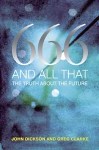
Reviewed by Katy Annis
What happens in the End? What does the Bible say will happen in the future?
The theological term most often used to describe the end of times is ‘eschatology’. 666 and All That by John Dickson and Greg Clarke addresses the topic of eschatology, a subject that both fascinates and concerns many people.
Dickson and Clarke treat this subject with a clear, concise and ‘no-nonsense’ approach. This book has a simple underlying argument; that is, Scripture itself does not provide a literal ‘play-by-play’ description of what the future will be like, therefore, we have little to gain by attempting to understand it in this way. Rather, they suggest that our focus should be on the promises, the hope and the joy that Christians can anticipate in the future Kingdom.

Sermon ‘The Lord Who Delivers’ (Psalm 31) by David Smith is now available to stream or download: http://bit.ly/2aXoIOi
Read the Bible text: http://bit.ly/2blnGhM
English Support Handout: http://bit.ly/2aWMTwE
1. A Psalm of Lament:
a. Relationship with the Lord who delivers
b. Relationship with the world to be delivered from
c. Relationship with the lamenter who needs deliverance
2. What the deliverance meant:
a. To David
b. To the first readers
c. To Jesus (Luke 23:46)
d. To Stephen (Acts 7:59)
e. To Us (1 Peter 4:19)
3. How to make the most of this Psalm
a. “I trust in you O Lord. I say “You are my God.”
b. What am I learning about God when times are not desperate?

In 1 Timothy 5:1-16 the Apostle Paul offers advise to Timothy (and those in the church that he leads) for honouring others – ‘Give honour to those widows who are really in need’ (5:3).
As he explains this advise, Paul is quite helpful in offering some suggestion in how to treat each widow differently given their particular situation – to the widow with children or grandchildren allow her family to care; to the godly widow who is alone offer her help; to the widow who has no interest in the things of God, exercise care if you help; to the faithful widow who is over sixty put her on the care list, but to the widow under sixty do not. All very specific!
Why?
The driving principle here is that the church of Jesus should be a help to those who are in most need (5:16) and if there are others like family members who should bear that responsibility, then allow them to do as such.
I take it that there are limited resources and that the wisdom here is to give priority to those who are most at risk- and at that time, it would have been the widow.
In this and the next post, I want to make two observations that may be helpful for our church family. Then in a third post a want to recommend a helpful book.

Sermon ‘The Least Politically Correct Chapter in the Bible’ (1 Timothy 2) by Paul Harrington is now available to stream or download: http://bit.ly/29zD8R6
Read the Bible text: http://bit.ly/29lhGUj

Sermon ‘Dancing With The Lord’ (Psalm 30) by Tim Patrick is now available to stream or download: http://bit.ly/2992WGM

